






Careful thought and planning go into making your senior residents feel comfortable in your extended care facility.
Your residents want to feel good in their home away from home.
Here are a few things to consider to help senior residents feel more at ease in your care setting.
A key objective of designing senior living space is to make the environment feel residential. But you can’t just walk into your local furniture store to choose furnishings for your extended care facility.
1. Room with a View + a Great Seating Arrangement
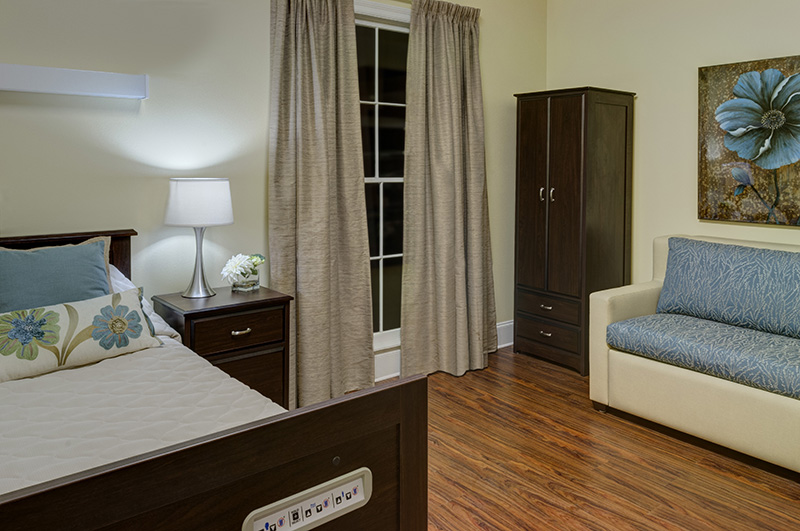
In a typical resident room, there will be an extended care adjustable-height bed with a headboard, footboard, and pressure-relieving mattress.
In addition, there will be a bedside nightstand, an overbed table, a dresser, and space for hanging clothes.
Size requirements for storage vary by state.
A free-standing wardrobe can fulfill the clothes-hanging space requirement in rooms that do not have a built-in closet. Each room should also have resident seating to encourage the resident to get up and out of bed.
In a skilled setting, this seating is normally used as guest seating. In either case, comfort is imperative to facilitate long periods of use.
2. Uncommonly Comfortable Common Areas
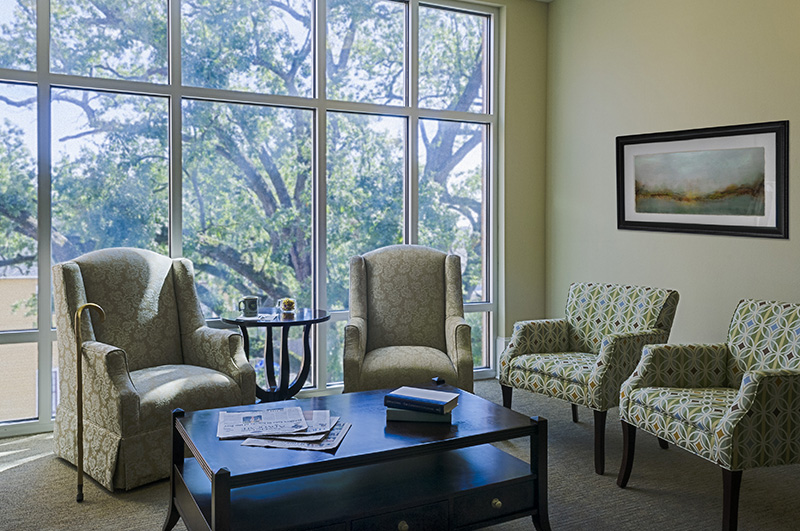
Common and dining area design follow the trends of the hospitality industry — with upscale seating areas and restaurant-like dining spaces.
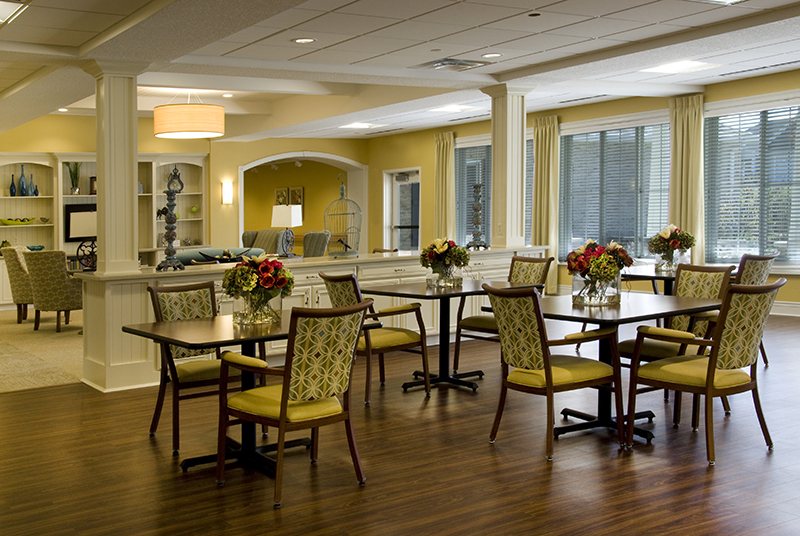

The seating throughout an extended care facility must be firmer than average to make it easier for a person with mobility issues to get up out of the chair or sofa. Look for seating that has a cushion made of highly-resilient foam core wrapped with a plush foam.
Seniors may be sitting in one place for awhile, so comfort is key.
3. No-Hurt Seating
All furnishings should have smooth rounded edges to prevent skin tears or bruising.
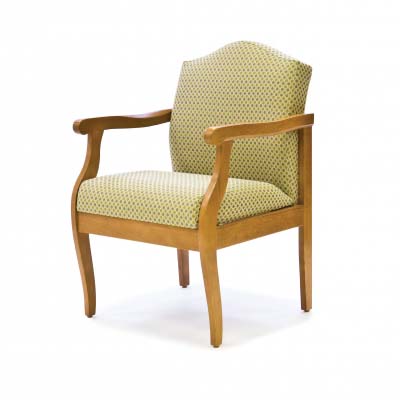
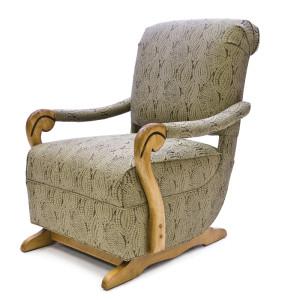
All seating should also have arms to push up with. Seating arms should ideally have a hand grip to aid in getting up or down in the chair. Keep in mind that seniors have less stomach strength for pushing up and out.
Seat height and depth are also modified for senior living to be slightly lower and with slightly less depth. Especially in a dementia or Alzheimer’s unit, motion seating is appropriate.
4. Finishing Fabrics
Fabric is also an important consideration.
Select fabrics with a cleanable, moisture-barrier backing, such as Crypton®, which is a brand, but used as a common descriptor like Kleenex® or Band-Aid®.
Fabric pattern is important too – too busy a pattern can be distracting or appear to be three dimensional.
5. Ask Basic American
To ensure that your facility provides appropriate products, contact your Basic American sales rep and ask about our complimentary interior design services.
Basic American Medical Products, a leading manufacturer of US-made beds, furniture and mattresses for the Extended Care industry, offers complimentary Interior Design services by an experienced Senior Living Healthcare Design Team.
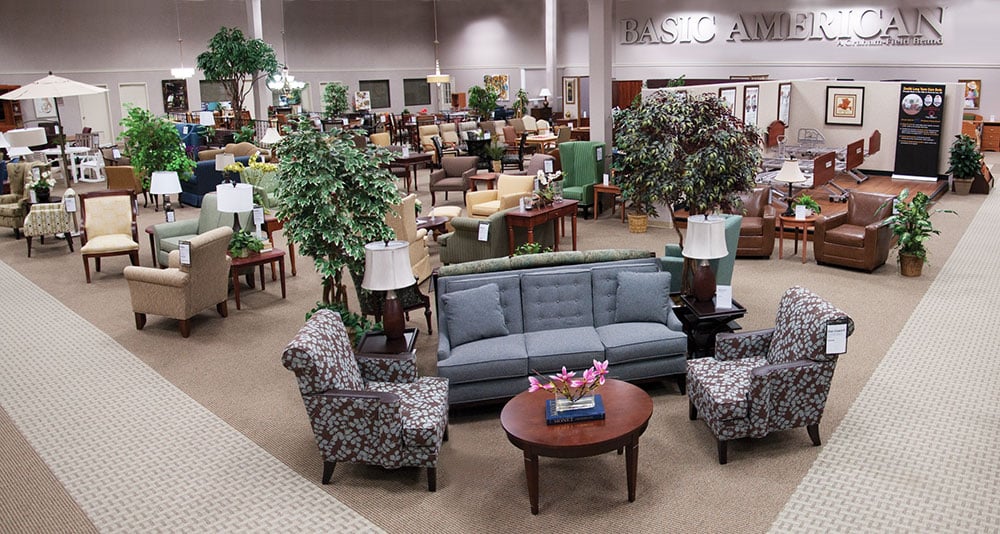
You are always welcome to visit our 10,000 square foot showroom and Design Center in Atlanta
Contact us for more ideas and advice.
Nancy Prossick is Marketing Manager, Extended Care, and Tricia Mitchell is Interior Design Manager at Graham-Field.