


Providing safe, dignified care for bariatric patients requires the right combination of equipment, training, and compassion. Bariatric care extends beyond simply accommodating higher weight capacities—it encompasses ensuring comfort, stability, and independence for patients while simultaneously protecting caregivers from injury. Understanding which safety products are available and how to implement them effectively can transform the quality of care you provide.
1. Bariatric Beds and Mattresses: The Foundation of Safe Care
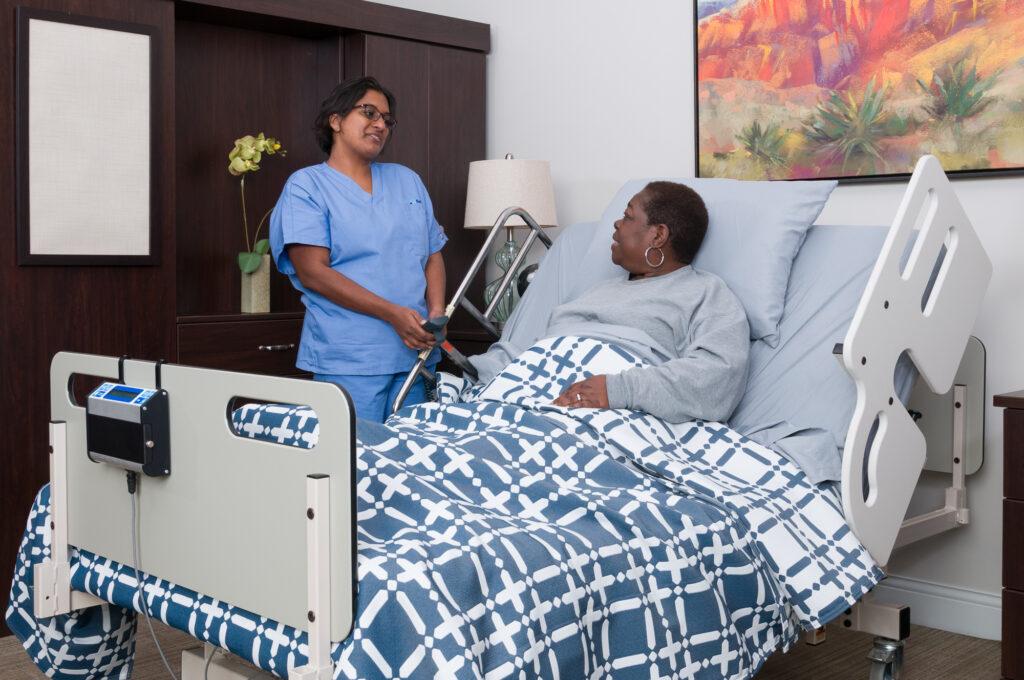
A sturdy, adjustable bariatric bed serves as the cornerstone of safe patient care in any clinical setting. These specialized beds typically support weight capacities ranging from 600 to 1,000 pounds and feature several critical design elements: wider sleep surfaces to accommodate patient comfort, reinforced frames engineered for durability, and power height adjustment systems that promote easier and safer transfers.
Equally important is pairing the bed with an appropriate pressure-relief bariatric mattress. These mattresses often incorporate advanced foam technology or low-air-loss systems specifically designed to prevent pressure injuries and skin breakdown—a significant concern for bariatric patients who may have limited mobility. The combination of a proper bed and mattress not only enhances patient comfort but also supports clinical outcomes by reducing the risk of complications.
2. Safe Patient Handling Equipment: Protecting Both Patients and Caregivers
Manual lifting poses serious musculoskeletal injury risks for caregivers and can compromise patient safety and dignity. Implementing appropriate handling equipment is essential for clinical practice. Consider incorporating the following aids into your care protocols:
Patient lifts with bariatric slings rated for higher weight limits provide mechanical assistance that eliminates dangerous manual lifting. These devices distribute weight evenly and allow for controlled, smooth transfers.
Transfer aids such as friction-reducing sheets or transfer boards (like the Lumex Transfer Board) significantly reduce strain during repositioning activities. These low-tech solutions can prevent caregiver injuries while maintaining patient comfort during lateral transfers.
Sit-to-stand lifts serve a dual purpose: they facilitate safe transfers while encouraging patient mobility and participation in their own care. This equipment helps maintain patient dignity by supporting functional independence rather than requiring passive lifting.
3. Bariatric Wheelchairs and Commodes: Supporting Mobility and Daily Function
Mobility aids designed specifically for bariatric patients incorporate essential structural modifications including wider seat widths, reinforced cross-braces for stability, and heavy-duty casters capable of smooth movement under increased weight loads.
A bariatric commode equipped with a non-slip seat and sturdy armrests provides the stability and confidence patients need during toileting—an activity where safety concerns are particularly acute. Meanwhile, a properly fitted bariatric wheelchair enables independent mobility within clinical or home environments, facilitating patient autonomy and allowing caregivers to support community integration and quality of life.

4. Fall Prevention and Support Accessories: Simple Tools, Significant Impact
While often overlooked, basic safety accessories play a crucial role in comprehensive fall prevention strategies. Safety rails provide secure grip points for transfers and ambulation. Transfer benches designed for bathtub use enable safer bathing by reducing the need to step over high tub walls. Bariatric walkers offer stability and support for patients working to maintain or improve their ambulatory abilities.
These seemingly simple tools can dramatically reduce fall risk when appropriately selected and properly used as part of an individualized care plan.
5. Safety Starts with the Right Fit: Clinical Assessment and Equipment Selection
Having access to bariatric equipment is only beneficial when it’s properly matched to patient needs. Clinical assessment should always include accurate weight capacity requirements and dimensional needs. Weight capacity ratings should exceed the patient’s current weight to provide an adequate safety margin.
When uncertainty exists about appropriate equipment selection, consult with your medical equipment provider or supplier. These professionals can provide guidance on products that match patient-specific needs, environmental constraints, and clinical goals. Never assume standard equipment will suffice—proper bariatric equipment is engineered differently and plays a critical role in safety.
Creating Comfort and Confidence: The Broader Goal of Bariatric Care

Bariatric safety products represent more than accommodation for size—they’re essential tools that promote comfort, preserve dignity, and support independence. When appropriate equipment is integrated into care plans, patients experience better rest, increased mobility, and improved safety in their daily routines.
Quality bariatric care acknowledges that every patient deserves equipment that fits their body, supports their function, and respects their dignity. By prioritizing proper equipment selection and implementation, clinicians create an environment where both patient safety and caregiver well-being are protected.
For more information on bariatric care solutions, visit www.grahamfield.com.