






There are many features to take into account when selecting an Extended Care bed, to keep the safety of your staff and residents in mind. Below are some factors that should play into your decision process when purchasing Extended Care beds.
How High (or Low) Can You Go?
Height travel range is important for several reasons.
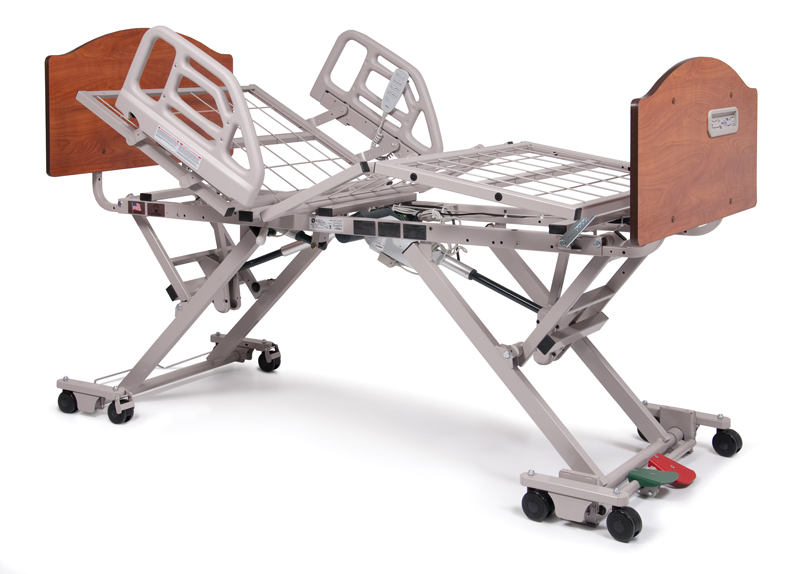
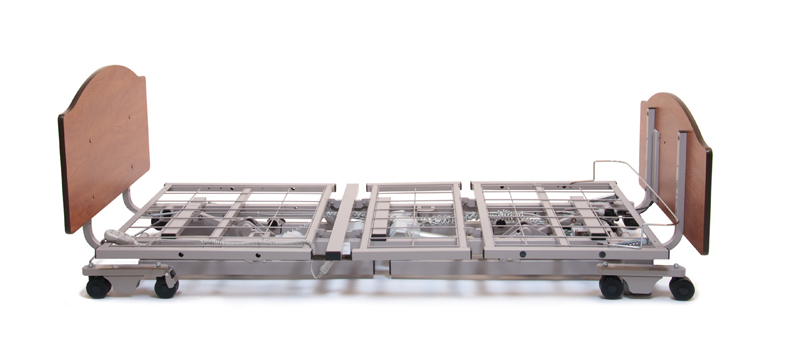
You’ll want the bed to go high enough that your staff can place the resident at a comfortable working height, reducing caregiver strain; but you’ll also want the bed to go low enough, especially in a dementia area, so that even if the resident does become disoriented and falls out of bed, the bed will be very close to the floor to prevent or mitigate any injuries. You may also wish to use a fall pad next to the bed in dementia units.
Safe Working Load (Maximum Weight Capacity)
Safe working load is also important, as this includes the weight of the resident, the support surface (mattress), the headboard and footboard, and any other accessories on the bed.
With resident weights escalating, you will probably want the safe working load to be at least 450 lb.
Remember that the sleep surface should also accommodate this weight. Your sleep surface is just as important as the bed because that comes in direct contact with the resident.
Bed Control Functions
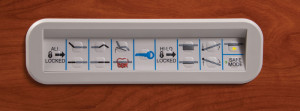
Do you want your residents to be able to control all functions of the bed at all times? You may wish to have an embedded footboard staff control to lock out certain adjustable features from the resident or family members. You would not want a grandchild putting a resident into Trendelenburg position by mistake, or raising the bed height of a resident who just underwent a hip replacement.
Ease in Adjustment
The bed should also be available or adjustable to 42” width. This is advantageous for both resident comfort and resident safety. Residents may be accustomed to a queen or king size mattress at home, but the standard width of extended care beds is 35” (narrower than a twin size mattress, which is 39”). A larger sleep surface helps reduce resident falls when they turn over in bed.
Extended Care Bed Requirements
Extended Care Beds should meet the particular requirements for electric medical beds, specifically ANSI-AAMI ES60601-1, IEC60601-1, IED60101-2-52, CAN/CSA C22.2 No. 606-1-1, and UL6060601-1.
- There are no scissor or crush pinch-points within 200mm (approximately 7.9”) of the bed perimeter. This protects the resident and caregiver.
- The bed is load tested in the worst case position at two times the maximum rated capacity (minimum 900 lb on the bed for one hour.)
- All electronic components and connectors must pass IPX4 splash-proof water rating.
- The bed will have a roll clearance of 20mm (.79”) minimum for transport. The bed will pass over a 20mm high barrier ten times back and forth at maximum load rating. This is especially important in the event that you may need to use your bed as a transport device for evacuation.
- Bed is tip/stability and securely-locked tested with load/forces applied to the perimeter of the bed. (Beds are loaded at perimeter with casters turned worst case, and shall not tip/slide.)
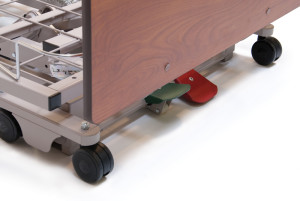
Does the bed have all of the available options you may require? You will want a locking mechanism that will function at any height, i.e. you can access the lock when the bed is in the lowest position. Is it easy to tell if the bed is locked? Are assist devices available to help the resident get in/out of the bed with a secure handhold? Do you need an edema foot ratchet that elevates the foot end to facilitate edema swelling? A trapeze is another common accessory that residents use to adjust their position in the bed.
Service When You Need It
Finally, can you get service parts when you need them? With beds produced in the USA, all Basic American bed parts are readily available.
Contact us for more ideas and advice.
Nancy Prossick is Marketing Manager, Extended Care at Graham-Field.