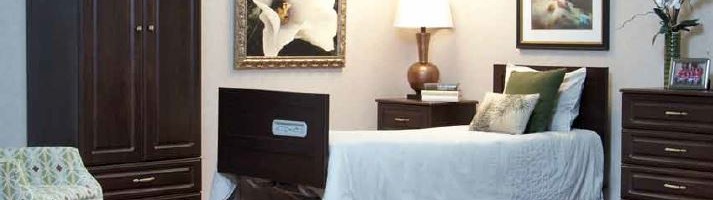





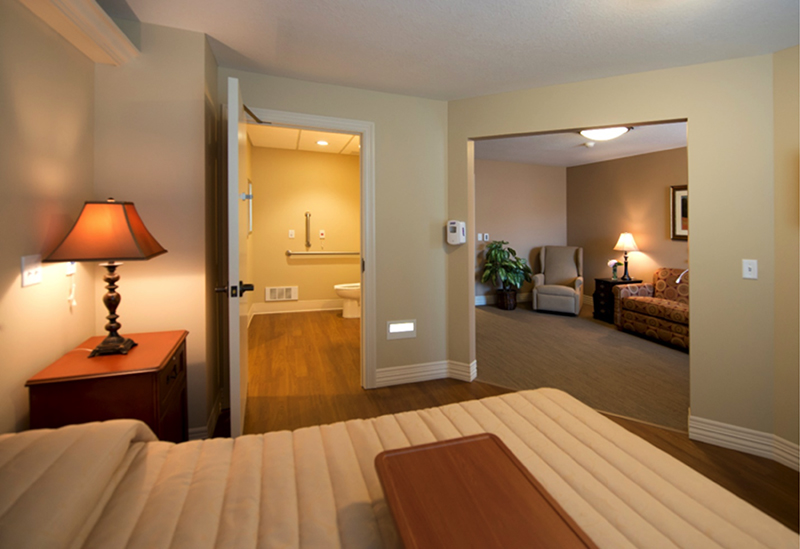
Resident rooms in the Senior Living industry can easily become too “clinical”. With codes and regulations to comply with, it takes a creative mind to give that resident a room that feels warm and inviting. As designers, it is our job to put ourselves in the resident’s shoes and put together rooms that can turn the clinical atmosphere into a welcoming space.
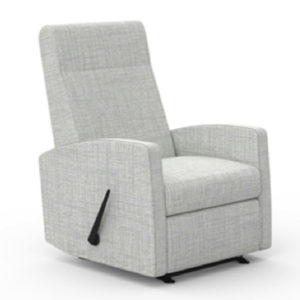
COMFORTABLE SEATING
Most residents are used to having a favorite recliner or chair they used to sit in at home. Unfortunately, it is not recommended that facilities let residents bring their own upholstered chairs, as that can spread infectious diseases.
We almost always try to install a small-scale recliner in a vinyl that is both comfortable and easy to clean. If space does not allow a recliner, then a cozy upholstered chair with arms will suffice.
ART

Artwork is important! This resident will be staring at this art day in and day out. Pieces should be peaceful and positive. Historical, landscape, and photographic images are always great choices.
Memory boxes are a great option for memory care units, and can also help a resident identify their room. Memory boxes add a personal touch to the artwork the resident looks at every day.
WINDOW TREATMENT
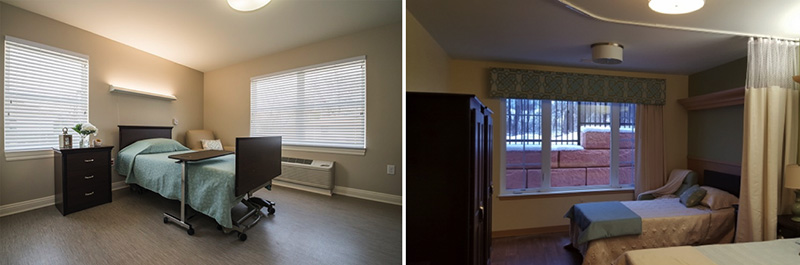
Window treatments are often overlooked in a resident’s room. Layering fabrics and adding a top treatment with faux wood blinds or a roman shade in a fun pattern can really enliven a room. Facilities will sometimes try to save money by only doing the faux wood blinds; but check out the difference, above, a window treatment can make.
BEDDING
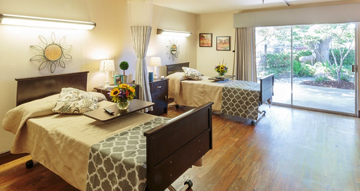
Bedding can be pretty pricey in senior living, so it’s easy to go with just a bedspread in a simple fabric. When you think about your own bed, consider how much time you spend in it! You’re probably in it for something like seven hours a day. These residents are sometimes in it all day, so bedding is something they are constantly touching and staring at. Take a simple attractive quilted bedspread, then add a colorful throw and patterned accent pillow. It completely transforms their room.
LIGHTING
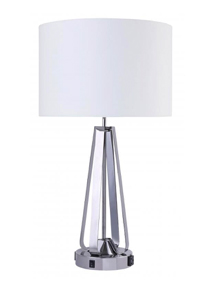
The over-bed light is another thing that makes a room look too clinical. In a residential or hospitality setting, you never see this type of lighting. More and more we are seeing facilities switch to table lamps on the night stand — it creates the ambiance of a residential room and provides adequate lighting for staff.
Look for a lamp that is made of metal or wood — if it is knocked over, it won’t shatter.
The lamp above is the perfect option — it has a rocker switch and two electrical outlets. Today’s residents now bring their cell phones and tablets, so an extra accessible outlet is always practical.
Pro Tip: It never hurts to have lamps bolted to the night stand so they cannot be knocked over.
*This is a Basic American partner product

To find out more about Basic American’s Extended Care Design Services, call Graham-Field at 1.770.368.4700 or visit us online at www.grahamfield.com.
or contact us here for more ideas and advice
Tiffany Grigston is an Interior Designer at Graham-Field.