






Uh-oh. The title says it all. We have a collective weight problem in the United States, and we’re not losing it any time soon.
The impact of our nation’s expanding waistline is spilling over into the healthcare field, not just in terms of co-morbidity factors associated with excess weight, but also in terms of the equipment necessary to safely treat and transport today’s bariatric patients.
According to the Centers for Disease Control and Prevention, more than 35% of adults aged 20 years and older are obese (2011-2012) and more than 69% of that same age group are medically classified as overweight. Eating habits and less exercise have contributed to the trend.

Wheelchair Seating Issues Escalate as Body Weight Increases
Proper adjustment and accommodation for wheelchair seating is more complicated with obese patients. For example, when a bariatric patient is sitting, their body mass may take up more space due to soft tissue areas or chest/abdomen expansion. Overweight individuals may have unique complications in finding comfortable seating due to varying body types and needs.

Regardless of weight, individual homecare users should be properly assessed for a wheelchair by an occupational therapist or clinician. According to the U.S. Department of Health and Human Services, overweight and obese individuals are at risk for additional chronic health conditions like hypertension, osteoarthritis, high cholesterol or high triglycerides, diabetes, heart disease, stroke, gallbladder disease, sleep apnea, other respiratory problems and cancer.
Should any of these other medical conditions exist in addition to weight factors, the wheelchair selection process will also need to take these factors into consideration.
RELATED: How to Choose a Suitable Wheelchair
For decades though, a standard wheelchair in the U.S. has typically been designed to measure 18” wide x 16” deep with a 250-pound weight capacity. Today’s standard wheelchair is a tight fit for most of the adult population, especially those who are struggling with obesity.
Healthcare Facilities Have an Expanding Need in Wheelchairs
That’s why the medical field is witnessing a redefinition of the standard for wheelchair sizes across the market, simply due to the rising influx of patients who no longer fit within the boundaries of traditional wheelchairs.

A recent survey by the healthcare group purchasing company, Novation, revealed that nearly half of U.S. hospitals are admitting more morbidly-obese patients than they did just two years ago.
Graham-Field® has seen a larger demand from our customers for wider wheelchairs that can offer flexibility in use by a varying number of patients, either at home or in a facility. The need is twofold, as clinicians are requesting not only wider seats, but also wheelchairs that can support up to 50 pounds more than the 250-pound standard, making 300-pound weight limits a normal request from equipment buyers today.
The Improved Everest & Jennings Traveler® SE Wheelchair
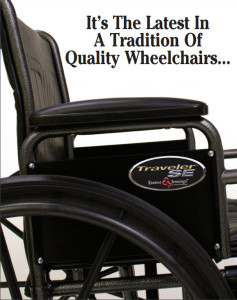
In response to the market demand, Graham-Field has broadened their Everest & Jennings™ product line of Traveler SE wheelchairs by rolling out a new version that features a 20” wide seat that is also 18” in depth. Additionally, the Traveler SE wheelchair overall weight capacity has increased to 300 lb. (evenly distributed)
The Traveler SE incorporates the legendary Everest & Jennings wheelchair frame with saddle-joint tubular construction and the latest industry standard front rigging. This wheelchair comes in a hammertone finish and provides the most effective combination K0001/K0002 wheelchair available.
Traveler SE Features:
- Black vinyl upholstery
- Chart pocket on back
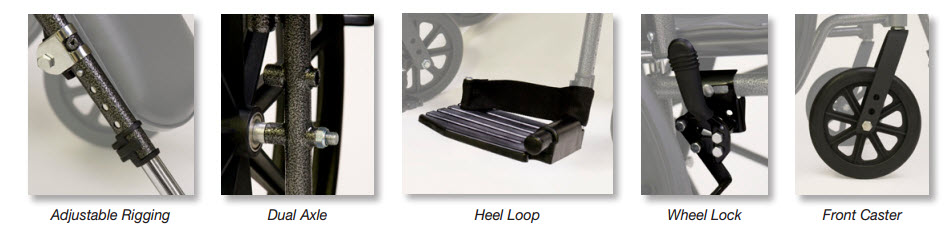
- Tool-free adjustable front rigging
- Hammertone paint provides a long lasting and durable finish
- Industry-compatible front rigging
- Two-position axle and caster fork provide 2″ seat height adjustment
- Maximum Weight Capacity 300 lb – EVENLY DISTRIBUTED on 20” x 18” models
- Meets Medicare codes K0001 and K0002
Learn more about the Traveler SE wheelchair series here, as well as other bariatric products that Graham-Field provides.
SOURCES:
http://www.gallup.com/poll/167651/obesity-rate-ticks-2013.aspx?version=print http://vizhub.healthdata.org/obesity/
http://www.cdc.gov/nchs/fastats/obesity-overweight.htm
Contact us for more ideas and advice.
Maria Garcia Silva is a Product Manager/ International Marketing Manager at Graham-Field.